
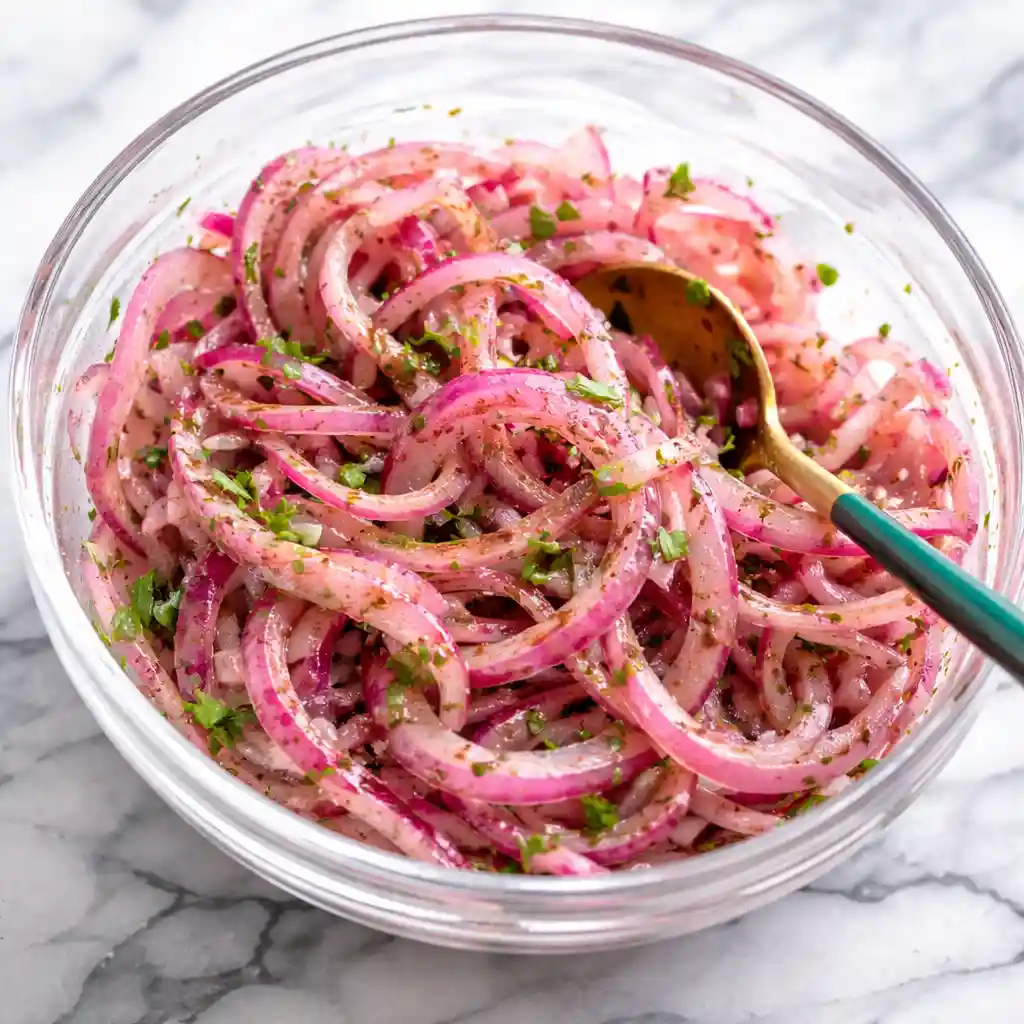
If you’ve ever had shawarma, kebabs, or a vibrant mezze platter and wondered what that bright purple, tangy onion salad was it was almost certainly Sumac Onions (Turkish Onion Salad). This simple yet bold dish transforms raw red onions into a silky, citrusy, deeply aromatic salad using sumac, lemon, and fresh herbs. It’s sharp but balanced, refreshing but savory, and pairs beautifully with grilled meats, wraps, and even burgers. Whether you’re searching for a classic sumac onion salad recipe or learning how to make sumac onions the authentic way, this guide covers everything.
What Is Sumac Onions (Turkish Onion Salad) / Why It’s Special
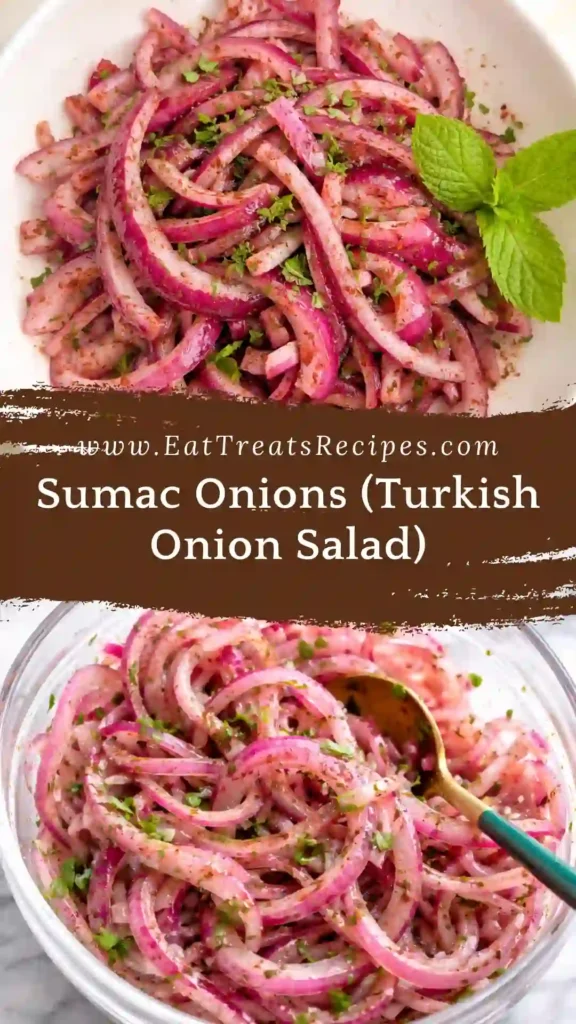
Sumac Onions, also known as Turkish sumac onion salad, is a traditional Middle Eastern and Turkish side dish made by thinly slicing red onions and massaging them with sumac seasoning, salt, lemon juice, and fresh parsley. In Turkey, it’s often served alongside grilled meats, kebabs, or as part of a larger mezze spread.
Unlike standard raw onion salad or onion salad with vinegar, this dish relies heavily on sumac a deep red spice made from dried and ground berries. Sumac has a tart, citrus-like flavor but contains no liquid acidity. That’s important.
Here’s what makes it special:
✔ Uses dry acidity (sumac) instead of relying only on vinegar
✔ Preserves onion crunch while softening harsh bite
✔ Brightens color and flavor naturally
✔ Works as salad, topping, spread, or side
Many recipes online stop at “slice and mix.” But authentic turkish sumac onions recipe requires proper technique to balance texture and flavor.
The Flavor Profile: What Do Sumac Onions Taste Like?
The sumac onions taste:
• Bright
• Slightly tangy
• Lightly sweet
• Fresh
• Aromatic
The combination of red onion + sumac + lemon produces a layered acidity that feels clean, not harsh.
Compared to:
- Lebanese pickled onions (more vinegar-forward)
- Sumac pickled onions (longer marination)
- Marinated onion salad with heavy dressing
This version remains fresh and vibrant.
The Science Behind Raw Onion Sharpness
Raw onions contain sulfur compounds.
When you slice them:
Enzymes react with sulfur → produce pungent compounds → create sharp bite and tear-inducing aroma.
But here’s the key.
When you:
✔ Add salt
✔ Massage onions
✔ Add acid (lemon or vinegar)
You trigger osmosis and partial enzyme neutralization.
The salt draws moisture out.
The acid reduces harsh sulfur intensity.
Massaging physically breaks down cell walls.
Result?
Silky texture.
Reduced bite.
Better flavor integration.
This step separates average onion salad from true Sumac Onions (Turkish Onion Salad) mastery.
Ingredients You’ll Need
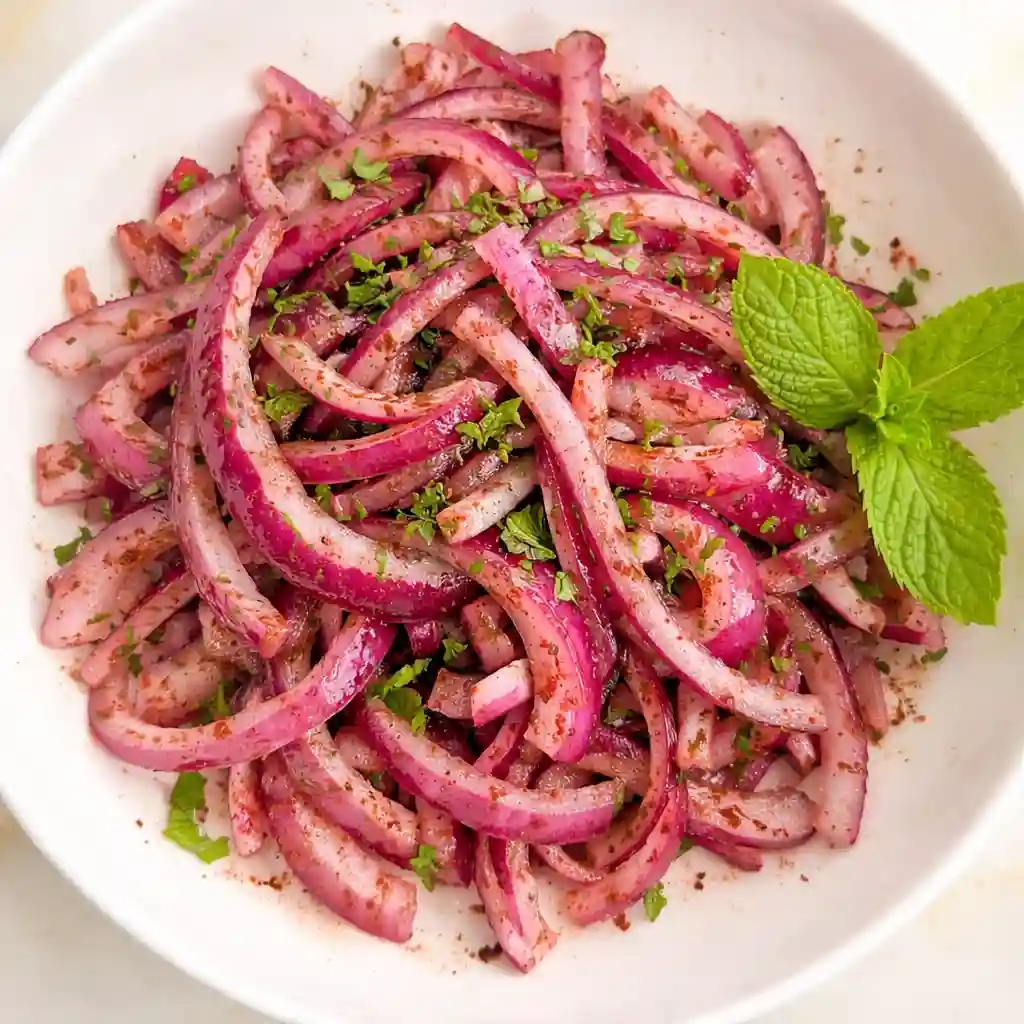
To make authentic Sumac Onions (Turkish Onion Salad), gather:
- 2 large red onions, very thinly sliced
- 1 1/2 tablespoons sumac seasoning
- 1 tablespoon fresh lemon juice
- 1 tablespoon olive oil
- 1/2 teaspoon salt
- 2 tablespoons fresh parsley, finely chopped
Optional additions:
- Pomegranate seeds (for turkish onion salad pomegranate style)
- Thinly sliced tomatoes (tomatoes with sumac and onions variation)
- Pinch chili flakes
Why Red Onion Is Essential
A red onion recipe works best because:
✔ Sweeter than white onions
✔ Softer texture
✔ Vibrant purple color
✔ Holds up to marination
White onions are sharper.
Yellow onions lack visual appeal.
For authentic lebanese sumac onions or turkish onion salad recipe, always choose red.
Step-by-Step Instructions
Step 1 – Slice Thinly
Use a sharp knife or mandoline.
The thinner the slice, the softer the texture after massaging.
Thin slicing ensures:
Even seasoning
Better absorption
Balanced bite
Step 2 – Salt & Massage
Place onions in bowl.
Sprinkle salt.
Massage firmly for 1–2 minutes.
Onions will soften and release liquid.
This is critical in how to make sumac onions properly.
Step 3 – Add Sumac
Sprinkle sumac evenly.
Massage again.
You’ll see the onions turn vibrant magenta.
This is the magic of sumac onions seasoning.
Step 4 – Add Lemon & Olive Oil
Add lemon juice and olive oil.
Toss gently.
Let sit 10–15 minutes.
This resting period allows flavor integration.
Step 5 – Add Parsley
Fold in chopped parsley right before serving.
This keeps herbs bright and fresh.
Sumac vs Vinegar
Why not just use vinegar?
Because vinegar adds liquid acidity.
Sumac provides dry acidity.
Dry acidity:
✔ Doesn’t water down texture
✔ Keeps onions crisp
✔ Deepens color
✔ Adds complexity
This is why turkish sumac onions taste more refined than onion salad with vinegar.
Sumac Onions for Shawarma & Grilled Meats
One of the most common uses:
Sumac onions for shawarma.
They cut through fatty meats beautifully.
Also pair with:
✔ Grilled chicken
✔ Lamb kebabs
✔ Kofta
✔ Burger side salad
✔ Falafel wraps
They act as both garnish and balancing element.
How To Make Sumac Onion Salad Spread
You can pulse prepared sumac onions lightly in food processor.
Add:
Extra olive oil
Tiny splash vinegar
Blend slightly.
This creates a sumac onions (turkish onion salad) spread perfect for:
Sandwiches
Wraps
Flatbreads
Sumac Pickled Onions Version
For longer storage:
Add:
Extra lemon
1 tablespoon vinegar
Let marinate 2–4 hours.
Becomes closer to sumac pickled onions.
Flavor intensifies over time.
Sumac Marinated Onions vs Lebanese Pickled Onions
Lebanese pickled onions typically use:
Heavy vinegar
Longer soak
Less sumac
Sumac marinated onions:
More herb-forward
Less sharp
Brighter color
Both are delicious but Turkish style is fresher and lighter.
When To Serve Sumac Onions
Perfect for:
• BBQ season
• Mediterranean bowls
• Wrap night
• Kebab platters
• Mezze spreads
Also works beautifully as:
Raw onion salad
Marinated onion salad
Burger topping
Nutritional Benefits
Red onions contain:
✔ Antioxidants
✔ Quercetin
✔ Anti-inflammatory compounds
Sumac also contains antioxidants and has antimicrobial properties.
Together, they create a refreshing and health-supportive side dish.
In this section, we elevate Sumac Onions (Turkish Onion Salad) from simple side dish to full culinary weapon.
We’ll cover:
- Turkish sumac onions recipe variations
- Sumac onions (turkish onion salad) dressing science
- Ottoman-style pomegranate version
- Sumac onions for shawarma & chicken
- Sauce & spread applications
- Tomato + sumac combination
- Bitterness troubleshooting
- Make-ahead strategy
Ottoman-Style Turkish Sumac Onion Salad
In southeastern Turkey, especially Gaziantep, it’s common to add:
✔ Pomegranate molasses
✔ Fresh pomegranate seeds
This creates turkish onion salad pomegranate variation.
How to Make It
After preparing your base:
Add:
- 1 teaspoon pomegranate molasses
- 2 tablespoons pomegranate seeds
Toss gently.
Result:
• Sweeter
• Deeper
• Slightly syrupy
• More complex
The acidity shifts from sharp lemon-forward to layered sweet-tart balance.
This variation is visually stunning perfect for Discover and Pinterest.
Sumac Onions (Turkish Onion Salad) Dressing Deep Dive
Many recipes barely discuss dressing.
But dressing balance is everything.
Classic Dressing Ratio
- 1 tablespoon lemon juice
- 1 tablespoon olive oil
- 1.5 tablespoons sumac
- ½ teaspoon salt
This keeps onions:
Moist but not soggy.
Advanced Dressing Variation (Restaurant Style)
For richer flavor:
- 1 tbsp lemon
- 1 tbsp olive oil
- 1 tsp red wine vinegar
- Pinch sugar
- Extra sumac
This version creates a more structured sumac onions (turkish onion salad) sauce.
Perfect for bowls and grilled meats.
How To Make Sumac Onion Salad for Shawarma
Sumac onions for shawarma are slightly more intense.
Add:
✔ Extra sumac
✔ Slightly more salt
✔ Finely chopped parsley
✔ Optional pinch cumin
Let marinate 20–30 minutes.
Why?
Fatty meats need stronger acidity.
This balances lamb, beef, or chicken shawarma beautifully.
Sumac Onions (Turkish Onion Salad) Chicken Pairing
One of the best combinations:
Grilled lemon chicken + sumac onions.
Why it works:
Chicken = mild protein
Sumac onions = acidic contrast
The spice cuts richness.
You can also mix chopped sumac onions directly into shredded chicken for:
✔ Sumac onions (turkish onion salad) chicken bowl
✔ Mediterranean protein bowls
✔ High-protein wraps
Sumac Marinated Onions vs Sumac Pickled Onions
These are NOT identical.
Sumac Marinated Onions
Short rest time (10–30 minutes)
Fresh texture
Bright color
Sumac Pickled Onions
Add vinegar
Rest 2–4 hours
Softer texture
More acidic
For BBQ season, short marinated works better.
For meal prep, pickled version lasts longer.
Tomatoes With Sumac and Onions
Classic Levantine combination.
Add:
- Diced ripe tomatoes
- Extra parsley
- Olive oil
Now you have a fresh marinated onion salad variation.
The tomatoes absorb the sumac beautifully.
This version works as:
✔ Mezze side
✔ Burger side salad
✔ Sandwich topping
✔ Grilled fish garnish
Sumac Onions Ottolenghi-Style
While not identical, Ottolenghi-inspired versions often include:
✔ Pomegranate
✔ Extra herbs (mint + parsley)
✔ Slight sweetness
To recreate:
Add:
- Fresh mint
- Tiny drizzle honey
- Toasted pine nuts (optional)
This elevates into a premium presentation.
Onion Bitterness Troubleshooting Guide
If your sumac onions taste too sharp:
Problem 1: Onions too thick
Solution: Slice thinner.
Problem 2: Not enough salt massage
Solution: Massage longer.
Problem 3: Old onions
Solution: Use fresh, firm red onions.
Problem 4: Too much vinegar
Solution: Increase olive oil slightly.
This guide ensures perfect Sumac Onions (Turkish Onion Salad) every time.
Texture Engineering
Texture depends on:
Slice thickness
Salt quantity
Massage duration
Acidity level
Ideal Texture Target:
Soft edges
Crisp center
Vibrant purple
Light sheen
Not:
Slimy
Watery
Overly limp
Sumac helps maintain structure because it adds acidity without excessive liquid.
Make-Ahead & Storage Science
Refrigerator Storage
Store in airtight container.
Best window:
12–24 hours after preparation.
After 48 hours:
Color deepens.
Texture softens.
Flavor intensifies.
Still delicious just softer.
Can You Freeze Sumac Onions?
No.
Freezing:
Breaks cell structure.
Creates mushy texture.
Best to prepare fresh.
Sumac Onions (Turkish Onion Salad) Mix for Meal Prep
You can prepare a dry mix:
- 3 tablespoons sumac
- 1 teaspoon salt
- Pinch chili flakes
Store in jar.
When ready:
Slice onions
Massage
Add lemon & oil
Instant sumac onions (turkish onion salad) mix shortcut.
Burger & BBQ Application
This salad works as:
✔ Burger topping
✔ BBQ side
✔ Hot dog garnish
✔ Steak garnish
Because it cuts fat.
It’s superior to basic onion salad with vinegar.
Lebanese Sumac Onions vs Turkish Version
Lebanese sumac onions often:
Use more parsley
Less olive oil
Sometimes no lemon
Turkish version:
More oil
More lemon
More massaging
Both delicious but Turkish is silkier.
When to Use White Onion Instead
If you want sharper flavor:
White onion creates more aggressive bite.
Good for:
Shawarma
Street food style wraps
But red onion remains classic.
Visual Presentation Strategy
For Discover and Pinterest:
Use:
✔ White plate
✔ Sprinkle extra sumac on top
✔ Scatter parsley
✔ Add pomegranate
Color contrast is powerful:
Purple + green + red = click magnet.
Now we transform Sumac Onions (Turkish Onion Salad) from a simple side into a versatile culinary tool and authority-building content asset.
This final section expands:
- Sauce & spread applications
- Bowl integration strategy
- Red onion recipe cluster
- Cultural background
- Nutritional breakdown
- SEO-optimized FAQs
- Serving & Discover positioning
Turning Sumac Onions Into a Sauce
You can convert your prepared sumac onions (turkish onion salad) into a spoonable sauce.
How To Make Sumac Onion Sauce
Take your finished salad and add:
- 1–2 tablespoons olive oil
- 1 teaspoon lemon juice
- Small splash water
Pulse lightly in a food processor (do NOT overblend).
Result:
A textured, tangy sumac onions (turkish onion salad) sauce perfect for:
• Drizzling over grilled chicken
• Spreading on flatbread
• Layering in shawarma wraps
• Adding to grain bowls
This technique increases usability and expands SEO intent beyond “onion salad recipe.”
Sumac Onions (Turkish Onion Salad) Spread Variation
For a thicker spread:
Blend sumac onions with:
- 1 tablespoon Greek yogurt OR tahini
- Extra drizzle olive oil
Now you have a creamy sumac onions (turkish onion salad) spread.
Perfect for:
• Sandwiches
• Burger buns
• Mediterranean toast
• Wrap fillings
This spread balances richness while keeping bright acidity.
Sumac Onions in Bowls & Mediterranean Plates
One of the strongest modern applications:
Protein bowls.
Add turkish sumac onions to:
✔ Grilled chicken bowls
✔ Lamb shawarma bowls
✔ Falafel plates
✔ Rice & hummus platters
✔ Mediterranean grain bowls
They function as:
Acid component
Crunch element
Color contrast
Flavor enhancer
In bowl architecture, every dish needs:
Fat
Salt
Acid
Texture
Sumac onions provide acid + texture simultaneously.
Red Onion Recipe Authority Cluster
To dominate “Red Onion Recipe” search intent, position this dish within a broader onion salad ecosystem.
Related applications:
• Raw onion salad
• Onion salad with vinegar
• Marinated onion salad
• Lebanese pickled onions
• Sumac pickled onions
By explaining differences clearly, your article becomes topical authority.
Cultural Background: Where Sumac Onions Come From
Sumac onions are deeply rooted in Turkish and Levantine cuisine.
In Turkey, especially in kebab houses:
They are served alongside:
Adana kebab
Doner kebab
Grilled chicken
Lahmacun
In Lebanon and Syria:
Similar versions exist as lebanese sumac onions, often with more parsley.
The use of sumac dates back centuries in Middle Eastern cooking as a souring agent before lemons were widely available.
This historical depth strengthens authenticity.
The Role of Sumac in Middle Eastern Cooking
Sumac is:
Ground from dried berries
Deep red
Citrusy and tart
Unlike lemon:
It adds acidity without moisture.
Unlike vinegar:
It doesn’t overpower.
Unlike citric acid:
It brings earthy complexity.
This explains why sumac onions taste more layered than simple onion salad with vinegar.
Nutritional Deep Dive
Red Onion Benefits
Contains:
✔ Quercetin (antioxidant)
✔ Anti-inflammatory compounds
✔ Fiber
✔ Vitamin C
Sumac Benefits
Studies show sumac contains:
✔ Polyphenols
✔ Antioxidant properties
✔ Antimicrobial potential
Olive Oil
Provides:
✔ Healthy fats
✔ Anti-inflammatory benefits
✔ Fat-soluble nutrient absorption
Together, Sumac Onions (Turkish Onion Salad) is:
Low calorie
Low carb
Gluten free
Plant-based
Heart-friendly
Calories & Macros (Approximate)
Per ½ cup serving:
• 45–60 calories
• 3–4g carbs
• 4g healthy fats
• Minimal sugar
It’s a naturally low-calorie side, ideal for:
Mediterranean diet
Low carb eating
Clean eating plans
Common Mistakes to Avoid
1. Skipping Massage Step
Results in harsh bite.
2. Using Pre-ground Old Sumac
Faded flavor.
Dull color.
3. Adding Too Much Vinegar
Overpowers sumac profile.
4. Over-marinating
Turns onions limp.
Proper balance is everything.
Serving Strategy for Maximum Impact
For presentation:
✔ Wide shallow bowl
✔ Sprinkle fresh sumac on top
✔ Add parsley at last minute
✔ Optional pomegranate
Color psychology:
Purple + green + red signals freshness and vibrancy.
Perfect for Pinterest and Discover visibility.
FAQs
How to make sumac onions less spicy?
Massage longer with salt before adding lemon. This reduces sulfur compounds and softens texture.
Can I use white onions?
Yes, but flavor will be sharper. Red onion recipe versions are traditional and visually better.
What does sumac onion salad taste like?
Tangy, lightly sweet, fresh, and bright. Less harsh than raw onion salad.
Can I prepare sumac onions ahead of time?
Yes. Best within 12–24 hours. After 48 hours texture softens significantly.
Are sumac onions the same as pickled onions?
No. Sumac marinated onions are fresher and use dry acidity. Pickled versions rely heavily on vinegar.
Can I add tomatoes?
Yes. Tomatoes with sumac and onions is a classic variation in Levant cuisine.
Are sumac onions healthy?
Yes. They’re low calorie, high in antioxidants, and naturally plant-based.
Final Serving Ideas
Use Sumac Onions (Turkish Onion Salad):
• Over grilled meats
• In shawarma wraps
• On burgers
• With falafel
• On avocado toast
• In Mediterranean bowls
• As mezze centerpiece
This dish transforms ordinary meals into vibrant, restaurant-quality plates.
If you love bold Mediterranean flavors, you’ll also enjoy pairing these Sumac Onions (Turkish Onion Salad) with our vibrant Mediterranean Salmon or the protein-packed High Protein Mediterranean Chicken Orzo for a complete bowl experience.
They also work beautifully alongside our fresh Mediterranean Lentil Salad or layered into wraps like this flavorful Greek Chicken Flatbread.
If you enjoy bright, tangy salads, don’t miss our refreshing Asian Cucumber Salad or the crisp Strawberry Crackle Salad for more colorful side dish inspiration. And for a full mezze-style spread, serve these sumac marinated onions with our creamy Guacamole Recipe or drizzle them over a hearty Chicken Crispy Rice Salad to elevate texture and flavor.
Final Thoughts
Sumac Onions (Turkish Onion Salad) is one of the simplest yet most powerful Middle Eastern side dishes.
With just red onions, sumac, lemon, and parsley, you create a bold, colorful, antioxidant-rich salad that:
Balances fatty foods
Enhances grilled meats
Adds brightness to bowls
Elevates wraps and sandwiches
When prepared correctly thin slicing, proper massaging, balanced acidity it becomes silky, vibrant, and deeply satisfying.
Once you master this recipe, you’ll never look at raw onion salad the same way again.