
Avocado oil has exploded in popularity over the last few years. From grocery store shelves to social media debates, it’s often labeled as one of the healthiest cooking oils available. But is avocado oil actually healthy or is it just a trend?
In this 2026 clean cooking review, we’ll break down avocado oil’s fat profile, stability, processing methods, heat performance, and practical kitchen use. Instead of hype or fear, this guide focuses on balance, evidence, and how avocado oil fits into a realistic, modern kitchen.
If you haven’t read our full cooking oil breakdown, start here:
👉 What Is the Healthiest Oil to Cook With? (2026 Clean Cooking Guide)
What Is Avocado Oil?
Avocado oil is extracted from the flesh of avocados, unlike most seed oils which are extracted from seeds. It’s naturally rich in monounsaturated fats the same primary fat found in olive oil.
There are two main types:
- Unrefined (cold-pressed) avocado oil
- Refined avocado oil
The difference between these two matters more than most people realize.
Fat Profile & Nutritional Overview
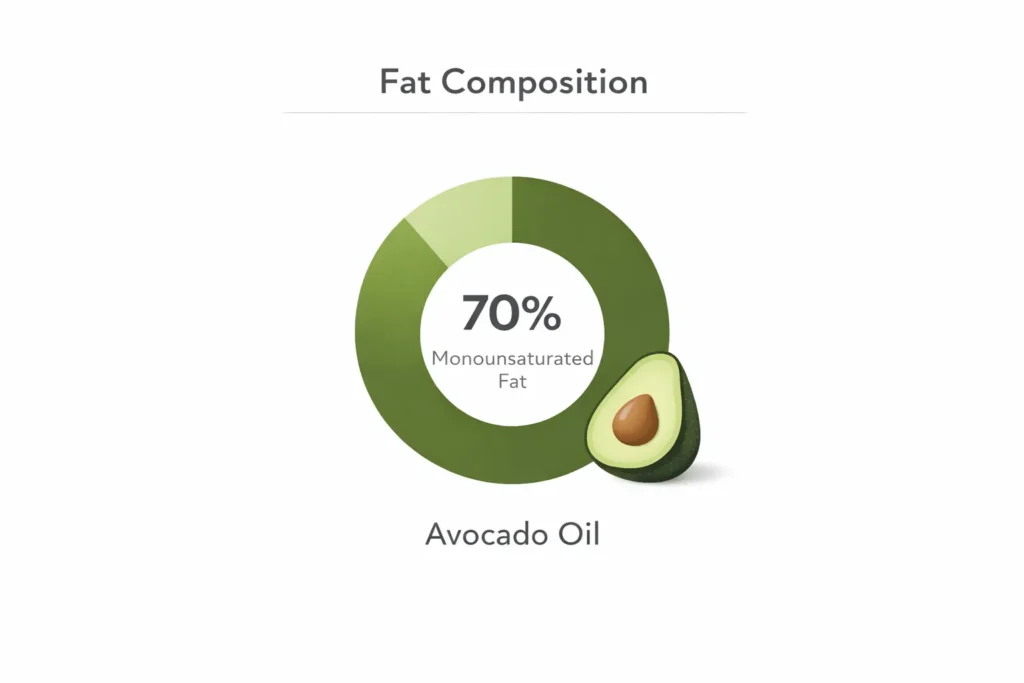
Avocado oil is primarily composed of:
- ~70% monounsaturated fat
- ~12–15% saturated fat
- ~10–15% polyunsaturated fat
Monounsaturated fats are considered stable and are widely used in traditional Mediterranean-style cooking patterns.
Avocado oil also contains:
- Vitamin E
- Plant sterols
- Small amounts of antioxidants
Compared to many highly processed vegetable oils, avocado oil is relatively simple in structure and composition.
Is Avocado Oil Stable for Cooking?
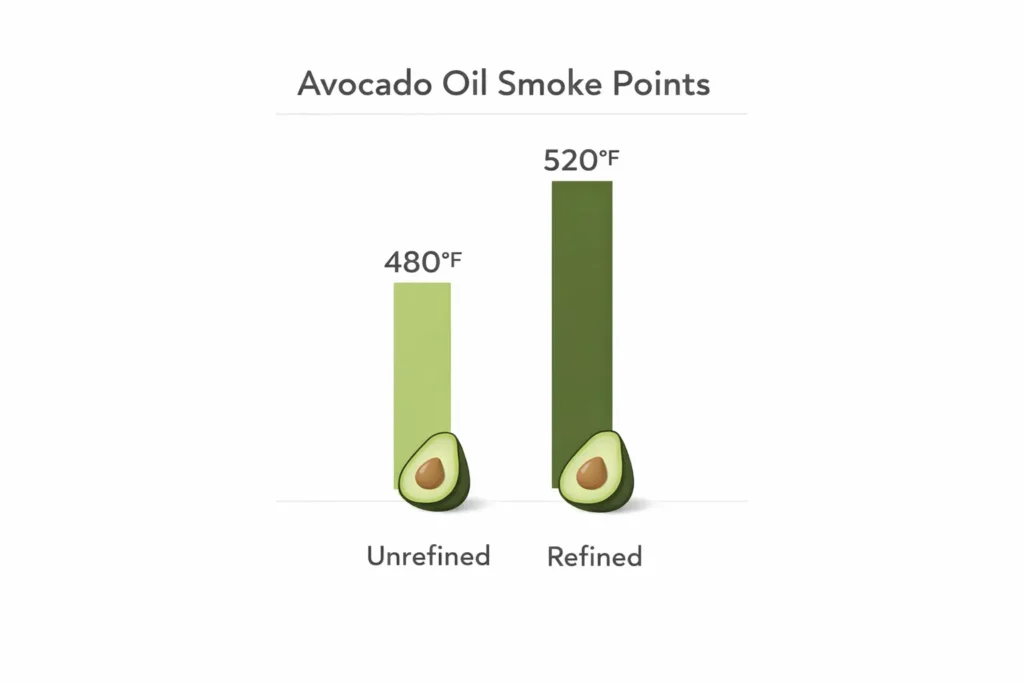
One of the main reasons avocado oil gained popularity is its high smoke point.
Smoke Point:
- Unrefined: ~480°F
- Refined: ~500–520°F
This makes it highly suitable for:
- Searing
- Roasting
- Air frying
- Cast iron cooking
However, smoke point alone doesn’t define health. Stability also depends on fatty acid composition and processing.
Because avocado oil is high in monounsaturated fat, it performs well under heat compared to many polyunsaturated-heavy oils.
For a full high-heat comparison, see:
👉 Best Oil for High Heat Cooking (2026 Guide)
Refined vs Unrefined: What’s the Difference?
This is where nuance matters.
Unrefined (Cold-Pressed) Avocado Oil:
- Extracted without high heat
- Retains more natural compounds
- Slight green tint
- Mild avocado flavor
Refined Avocado Oil:
- Processed for higher smoke point
- Neutral taste
- Lighter color
- Often filtered
From a clean cooking perspective:
- Cold-pressed versions are preferred for minimal processing.
- Refined versions are useful when neutral flavor and extreme heat tolerance are needed.
Neither is inherently “bad” they simply serve different purposes.
Common Concerns About Avocado Oil
1️⃣ Is avocado oil processed?
Some brands undergo refining, but not all avocado oil is heavily processed. Reading labels and choosing reputable brands helps.
2️⃣ Is avocado oil inflammatory?
Avocado oil is primarily monounsaturated fat, not polyunsaturated-heavy. It does not fall into the same category as industrial seed oils high in omega-6.
3️⃣ Is avocado oil healthier than olive oil?
They are very similar in fat composition. Olive oil contains more polyphenols, while avocado oil has a higher smoke point.
For full comparison, read:
👉 Olive Oil vs Avocado Oil (2026 Comparison)
Avocado Oil vs Other Common Oils
Avocado Oil vs Olive Oil
- Similar fat profile
- Olive oil higher in antioxidants
- Avocado oil higher smoke point
Avocado Oil vs Coconut Oil
- Coconut oil higher in saturated fat
- Avocado oil more neutral
- Avocado oil more versatile for high heat
Avocado Oil vs Vegetable Oil
- Avocado oil less processed (depending on brand)
- Vegetable oils often higher in polyunsaturated fats
When Avocado Oil Makes the Most Sense
Avocado oil works best when:
- You frequently cook above 425°F
- You want a neutral oil
- You prefer monounsaturated fat profile
- You want versatility for searing & baking
It’s less necessary if:
- You primarily sauté at moderate heat
- You prefer the flavor of olive oil
- Budget is a primary concern
Clean Cooking Perspective (2026)
The healthiest oil isn’t about trends it’s about:
- Matching oil to cooking temperature
- Avoiding overheating
- Using stable fats
- Choosing minimally processed options
Avocado oil fits very well into a clean cooking kitchen especially when used strategically.
A practical setup might include:
- Extra virgin olive oil for daily cooking
- Avocado oil for high heat
- Optional ghee or tallow for specialty uses
You don’t need one “perfect oil.” You need the right oil for the right job.
Frequently Asked Questions
Is avocado oil good for weight management?
Like all oils, it’s calorie-dense. Portion control matters more than oil type.
Is avocado oil safe for frying?
Yes, especially refined versions due to high smoke point.
Can I replace olive oil with avocado oil?
Yes, though flavor differences may change the final dish.
Is avocado oil better than canola oil?
Avocado oil is typically less processed and higher in monounsaturated fats.
Final Verdict (2026 Review)
Avocado oil is a stable, versatile cooking fat with a strong monounsaturated fat profile and high smoke point. It’s neither magic nor overhyped it’s simply a practical tool when used appropriately.
Rather than labeling it the “healthiest oil,” it’s more accurate to say:
Avocado oil is one of the most heat-stable options for modern kitchens.
For a complete oil breakdown, read:
👉 What Is the Healthiest Oil to Cook With? (2026 Clean Cooking Guide)